“grain shape” search results (900)

Yemeni Coffee Flavor Taste Manor Introduction Yemen Fine Coffee Bean Introduction
Yemeni coffee has many varieties, mostly named according to its origin and type, with different flavors, such as fresh wood, tobacco, musk, fruit wine, roasted nuts, cocoa and warm seasonings. Moha coffee is especially so. At present, Yemen moha coffee is most famous in the market, such as Ismaili, Matari, Sanani and other varieties. Sanani coffee beans are medium in size and have fruit wine style.
2016-07-22 Yemen Coffee Flavor Taste Manor Region Introduction Boutique Coffee Bean
Yemeni Moha Coffee the latest introduction of Yemeni coffee Yemeni coffee has a unique flavor
Yemeni coffee originated from Arabian coffee trees hundreds of years ago, all of which are produced in areas above 3000 feet above sea level. For hundreds of years, the unique planting and production methods of Yemeni coffee have remained almost unchanged. The seedlings of Yemeni coffee trees are first cultivated in nurseries and then transplanted to high elevations. Pesticides and fertilizers are not used in the breeding process. Mature coffee beans are naturally dried on coffee trees and shelled by stone mill.
2015-11-29 Yemen Moha Coffee latest introduction Flavor unique from
Cultivation techniques of small-grain Coffee in Yunnan Province: disease Control
1. Coffee rust is the main disease of coffee, the most harmful, the damaged plants, light reduced yield, serious death. Coffee rust is mainly harmful to leaves and sometimes to young fruits and twigs. After the leaves were infected, many light yellow spots appeared at first and enlarged in the form of water stains, followed by orange-yellow powdery spores on the back of the leaves, and there was a light green halo around the disease spots, which gradually expanded or connected in the later stage.
2015-10-07 Yunnan Province small grains coffee cultivation techniques diseases control
What are the varieties of small-grain coffee beans? Yunnan small-grain coffee brand flavor taste Huaguoshan introduction
This species is the most widely cultivated species in the genus Coffea. Because of its strong cold resistance and short-term low temperature resistance, it can grow on a mountain at an altitude of 2100 meters in the tropics, but is not resistant to drought; the branches are fragile and not resistant to strong wind; the disease resistance is relatively weak; the fruit is easy to fall off after ripening; after processing, the coffee has a low flavor and caffeine content. 1, sexual reproduction is a performance to obtain a large number of seedlings.
2016-10-18 Small grains coffee beans which varieties Yunnan coffee brand flavor taste flowers and fruits
Introduction to the flavor and taste of coffee manor in Tanzania
Tanzania's main coffee producing area, located at the foot of Mount Kilimanjaro, is rich in volcanic soil. Some coffee trees planted here are more than 100 years old. Coffee was first introduced by Christians from Kenya to grow coffee. Coffee trees must be carefully taken care of, weeded and fertilized. And old branches must be cut off so that new branches can grow to maintain the quality of coffee beans.
2016-08-11 Tanzania coffee manor producing area flavor taste characteristics introduction Arusha
The requirements of geographical environment for the cultivation techniques of coffee trees
The cultivation technology editor requires that the origin of coffee tree [4] is in Ethiopia in Africa. In botany, coffee trees belong to the evergreen trees of the subgenus Rubiaceae, and coffee beans, commonly known as coffee beans, are actually the seeds of the fruit of coffee trees. They are called coffee beans only because they are shaped like beans. Climate is the decisive factor for coffee cultivation. Coffee trees are only suitable for growing in the tropics or
2016-06-06 Coffee species cultivation techniques geographical environment requirements editors
The living conditions of Coffee Manor at the Source of Coffee Industry chain
In the whole coffee industry chain, coffee planting is probably the source. If you want to save costs, coffee giants with profits will contract local coffee estates where they are going to perform. Starbucks, the fastest growing coffee leader in China in recent years, has also signed a supply agreement with Aini Coffee in Yunnan, China, and then there will be Brista Coffee training School to take you into the coffee.
2015-08-31 Coffee industrial chain source manor survival conditions
Species morphology of Colombian coffee
The main varieties of Colombian coffee are small grains of coffee. Plants are small trees or large shrubs, 5-8 m tall, usually much branched at base; old branches gray-white, nodes dilated, young branches glabrous, compressed. Leaves thinly leathery, ovate-lanceolate or lanceolate, 6-14 cm long and 3.5-5 cm wide, tip long acuminate, acuminate part 10-15 mm long, base cuneate or slightly obtuse, rarely rounded, entire or
2016-05-24 Columbia Coffee species Morphology Variety Major small Grain
Species morphology of Colombian coffee
The main varieties of Colombian coffee are small grains of coffee. Plants are small trees or large shrubs, 5-8 m tall, usually much branched at base; old branches gray-white, nodes dilated, young branches glabrous, compressed. Leaves thinly leathery, ovate-lanceolate or lanceolate, 6-14 cm long and 3.5-5 cm wide, tip long acuminate, acuminate part 10-15 mm long, base cuneate or slightly obtuse, rarely rounded, entire or
2016-05-25 Columbia Coffee species Morphology Variety Major small Grain
Species morphology of Colombian coffee
The varieties of Lambian coffee are mainly small-grain coffee. Plants are small trees or large shrubs, 5-8 m tall, usually much branched at base; old branches gray-white, nodes dilated, young branches glabrous, compressed. Leaves thinly leathery, ovate-lanceolate or lanceolate, 6-14 cm long and 3.5-5 cm wide, tip long acuminate, acuminate part 10-15 mm long, base cuneate or slightly obtuse, rarely rounded, entire or present
2016-06-01 Columbia Coffee species Morphology Biya varieties Major small grains plants
Is there a difference between coffee cubes and yellow sugar? the difference between yellow sugar and white sugar
In the 1970s, the Swedish Sugar Company successfully developed a new vibrating molding method for making cube sugar, also known as ssa or vibro. It applies modern consolidation technology and uses high-frequency vibration to consolidate sugar grains into uniform and solid squares. The sugar prepared by this method has better gloss (because the grains on the surface will not be crushed), uniform pores between grains, higher porosity and higher dissolution rate.
2016-07-16 Coffee cube sugar is different from yellow moxa yellow white sugar difference 1970s Rui
Arabica beans-- A family "genealogy" like rising day and moon
Arabica, (scientific name Coffea arabica, Coffee Arabica), also known as Arabica coffee, is an indigenous species of coffee grown on the Abyssinia Plateau of Ethiopia (present-day Ethiopian Plateau). According to textual research, it is the first artificially cultivated coffee variety in the world, one of the most important coffee tree species, and occupies the global coffee.
2014-08-29 Arabica bean
Characteristics of three native species of coffee
The center of the coffee fruit is a pair of symmetrical and oval seeds. The contact surface of the seeds is flat, so it is called "Flat bean". Only one round seed in the fruit is called "Pea berry". Raw beans are caused by abnormal mating, often at the end of coffee trees that bloom too late or too early. Its rounded shape
2014-07-04 Coffee knowledge coffee beans coffee encyclopedia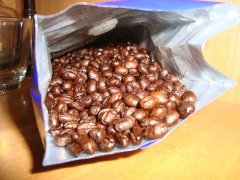
Yunnan small Coffee beans (group of pictures)
Coffee cherry fruit generally has two flat seeds, if one does not grow properly, only one bean seed sprouts, in a fruit there is only a small round bean (deformed), with a small crack in the middle, it is called pea-shaped coffee bean (peaberry). Round beans (Peaberry) are also known as perle, Perla and caracol. A normal Arabica.
2014-09-19 Yunnan small grain coffee beans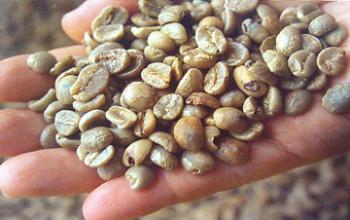
Detailed introduction of coffee beans: introduction of the classification characteristics and shapes of several kinds of defective beans
Coffee training several kinds of defective beans introduce moldy beans: because of incomplete drying, or damp during transportation and storage, cyan and white molds grow, which sometimes make the beans stick together. If these moldy beans are not removed, they will produce a moldy smell. Dead beans: beans with abnormal results. The color is not easy to change because of baking, so it is easy to distinguish. The flavor is thin, with silver skin
2015-12-23 Coffee beans details introduction several defects classification features shapes differences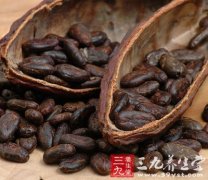
Take stock of the global origin of high-quality coffee beans (3)
A few steps to buy coffee beans fresh is the most important factor in buying coffee beans. There are several steps to judge whether the beans are fresh or not: 1. Grab a handful of coffee beans and feel whether they are solid beans with the palm of your hand. 2. Whether it is enough to smell the aroma close to the nose. 3. Put a bean into your mouth and bite it twice. There is a clear sound indicating that the bean is well preserved and not damp. If
2014-08-25 Coffee bean producing area coffee encyclopedia coffee common sense
How to choose coffee beans? What do you need to pay attention to when buying coffee beans
How to choose fresh coffee beans is the most important factor in buying coffee beans. There are several steps to judge whether the beans are fresh or not: 1. Grab a handful of coffee beans and feel whether they are solid beans with the palm of your hand. two. Smell the fragrance close to your nose. three. Take a bean into the mouth and bite it twice, and there is a clear sound indicating that the bean is well preserved and not damp. (Brazilian Coffee
2015-02-07 How pick coffee beans need pay attention to what how new
Only fresh coffee beans can grind good coffee.
Generally speaking, the best drinking period for coffee is two weeks after baking, when the coffee beans are the freshest and the Aroma taste is the best.
2014-05-15 Coffee knowledge coffee beans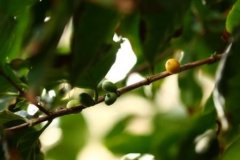
What conditions do you need to grow coffee trees?
Coffee is a perennial evergreen shrub or small tree of Rubiaceae. It is a horticultural perennial cash crop with the characteristics of fast growth, high yield, high value and wide market. Wild coffee trees can grow to a height of 5 to 10 meters, but coffee trees planted on the manor are often cut to a height of less than 2 meters in order to increase the amount of fruit and facilitate harvesting. The opposite leaves of coffee trees are long oval.
2015-11-02 Coffee planting needs what conditions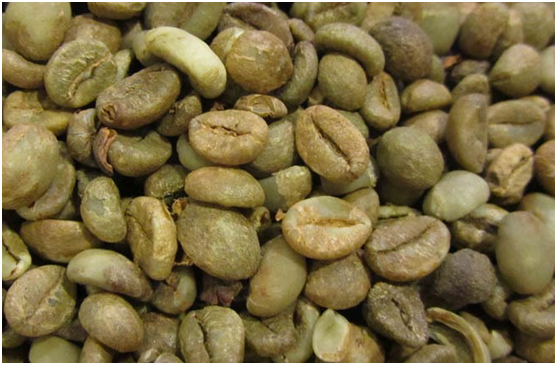
What is the better taste of large granulated beans and small granulated beans?
From the fruit state of coffee beans when they are picked from the tree to the state of raw beans that can be baked, the moisture content of coffee beans will be controlled between 9% and 13%, and it is not easy to bake if the water content is too high or too low. Generally, we get newly collected raw beans with water washing treatment, the moisture content is usually about 11.5% to 12.5%, half-washed Mantenin may reach 13%, and half-washed Brazil is 11% ~ 12% per day.
2015-09-09 Particles what kind taste